
Dental Crown Ghatkopar East, Mumbai
Dental Crown Ghatkopar East
Restore Damaged Teeth with a Natural-Looking Dental Crown
A damaged, weakened or heavily decayed tooth can affect much more than your smile. It may also make chewing uncomfortable and, over time, increase the risk of further damage. Fortunately, a dental crown can help restore the tooth’s strength, shape and appearance while allowing you to continue using your natural tooth.
At Dental Terapia by Dr. Sonali Shah in Ghatkopar East, Mumbai, dental crowns are recommended after carefully assessing the condition of the tooth, surrounding gums and overall oral health. The aim is not simply to place a crown, but to provide a restoration that fits comfortably, functions well and complements your natural smile.
If you have a broken, severely decayed, discoloured or weakened tooth, a dental crown may be an appropriate restorative option.
Call – +91 7021109112

What Is a Dental Crown?
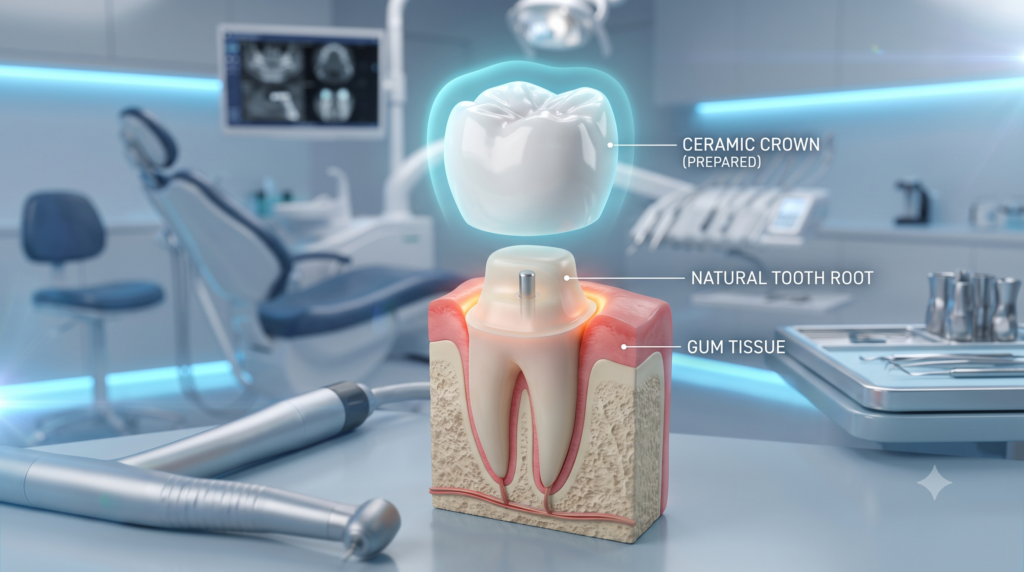
A dental crown ghatkopar, commonly called a tooth cap, is a custom-made restoration that covers a damaged or weakened tooth.
In simple terms, the crown acts like a protective covering around the remaining tooth structure. Therefore, it can help restore the tooth’s shape and function while also improving its appearance.
Depending on your dental condition, a crown may be recommended to:
However, not every damaged tooth requires a crown. Therefore, a dental examination is important before deciding on the most suitable treatment.
When Might You Need a Dental Crown?
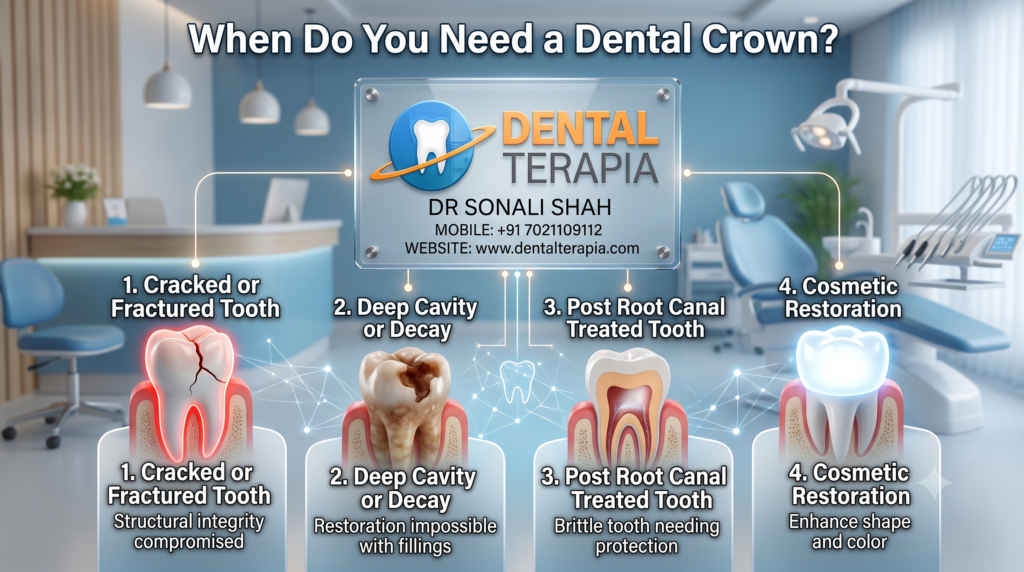
A dental crown may be considered in several situations.
1. Severely Damaged or Broken Tooth
If a tooth has lost a significant amount of its structure because of decay, trauma or fracture, a filling may not provide sufficient support. In such cases, a crown can cover and protect the remaining tooth structure.
2. After Root Canal Treatment
A tooth that has undergone root canal treatment may require additional protection, depending on the amount of remaining tooth structure and its location. A dental crown ghatkopar can help restore the tooth and protect it from further damage.
3. Large Dental Fillings
Sometimes, a tooth with a very large filling has limited natural tooth structure remaining. Consequently, a crown may provide additional protection and structural support.
4. Worn or Damaged Teeth
Teeth affected by significant wear, grinding or other forms of damage may sometimes benefit from restorative treatment. Your dentist can assess whether a crown is appropriate.
5. Cosmetic Improvement
In selected cases, crowns can improve the shape, colour or appearance of a severely discoloured or misshapen tooth. Nevertheless, less invasive cosmetic options may be preferable in some situations.
6. Dental Implant Restoration
Dental implants require a restoration that replaces the visible part of the missing tooth. A custom-made crown can be attached to the implant to restore appearance and function.
Benefits of Dental Crowns
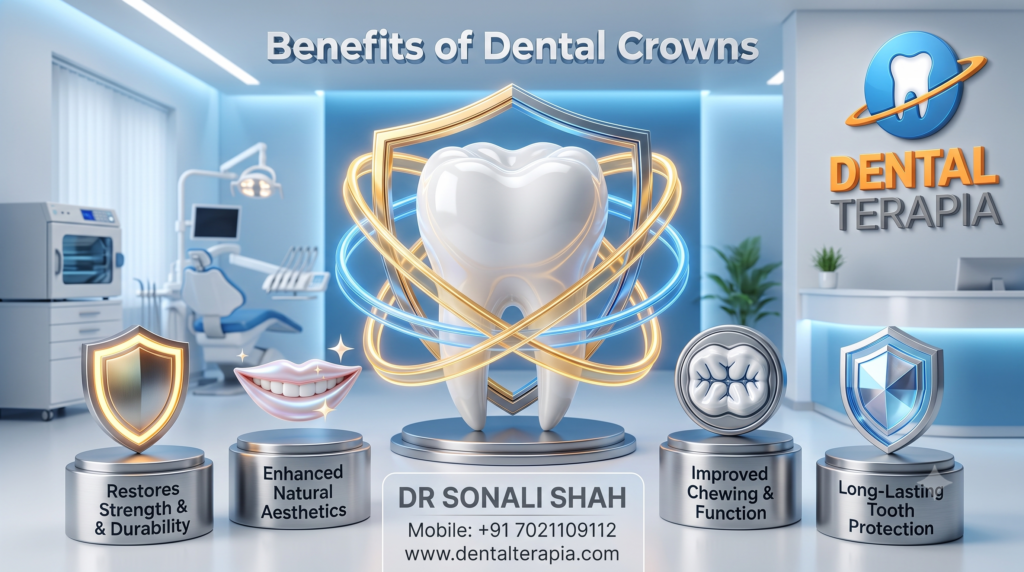
A properly planned dental crown ghatkopar can provide several benefits.
Restores Tooth Function
A crown can help restore normal biting and chewing when a tooth has been significantly damaged.
Protects the Remaining Tooth
By covering the weakened tooth structure, a crown can provide additional protection against further wear or damage.
Improves Appearance
Modern dental crowns can be designed to resemble natural teeth in terms of shape, colour and proportion.
Supports Long-Term Tooth Restoration
When combined with good oral hygiene and regular dental care, a well-maintained crown can form an important part of a long-term restorative treatment plan.
Restores Your Confidence
A damaged tooth can make people conscious about smiling or speaking. Therefore, restoring the tooth can also help you feel more confident in everyday situations.
Types of Dental Crowns
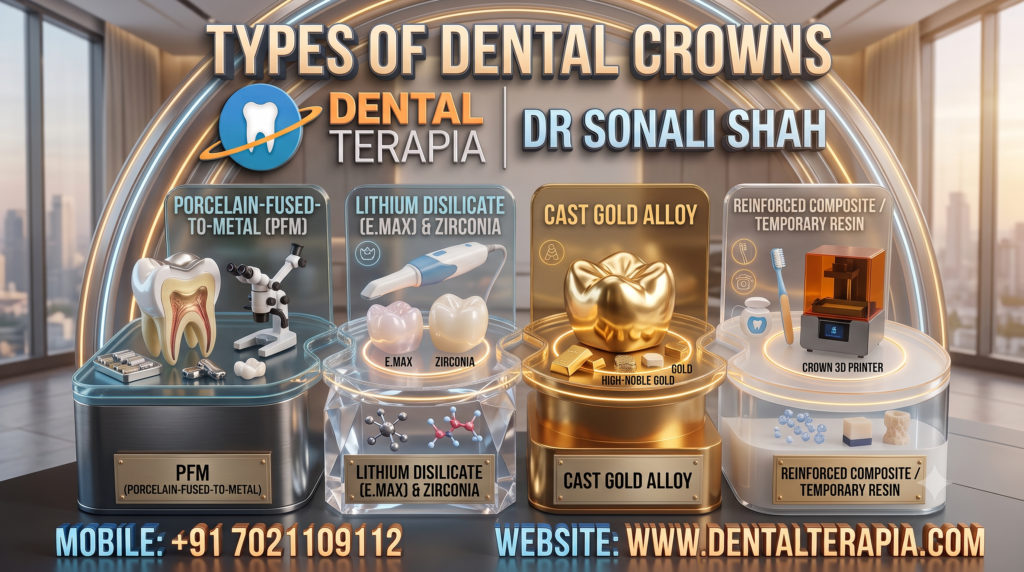
Dental crowns are available in different materials. The appropriate choice depends on factors such as the location of the tooth, your bite, aesthetic expectations and the amount of remaining tooth structure.
Zirconia Crowns
Zirconia is a strong and tooth-coloured restorative material. Therefore, it may be suitable for patients looking for a combination of strength and aesthetics.
Ceramic or All-Ceramic Crowns
These crowns can provide a natural-looking appearance and may be particularly suitable for certain visible teeth.
Porcelain-Fused-to-Metal Crowns
These restorations combine a metal substructure with a tooth-coloured outer layer. They have been used extensively for dental restorations.
Metal Crowns
Metal restorations offer exceptional durability. However, because of their appearance, they may be more suitable for specific situations, particularly where aesthetics are less important.
The best crown material is not necessarily the same for every patient. During your consultation, Dr. Sonali Shah can assess your tooth and discuss the options that may be suitable for you.
Dental Crown Procedure: What to Expect
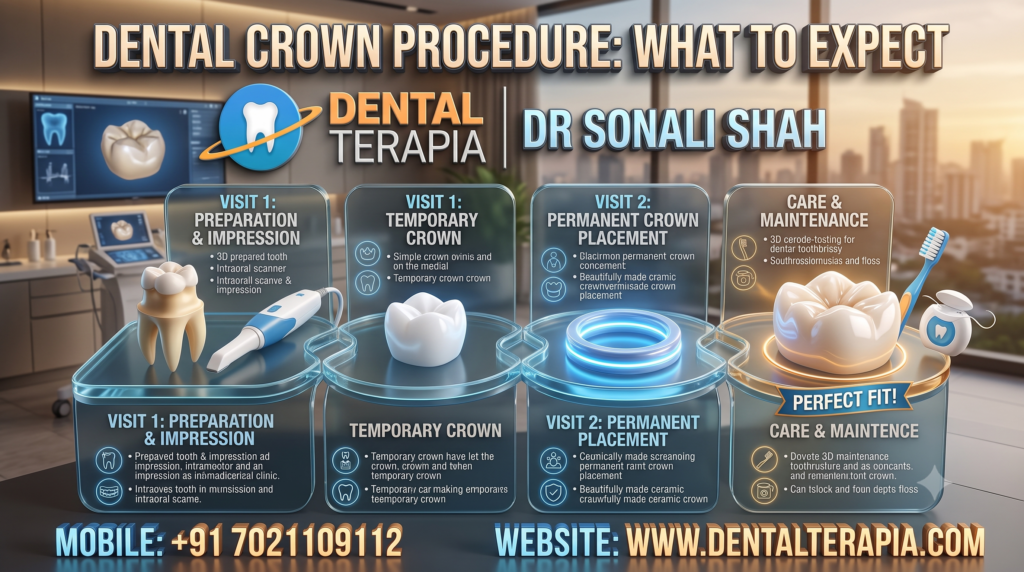
Getting a dental crown usually involves several steps. The exact treatment plan, however, depends on the condition of your tooth.
Step 1: Dental Examination
First, we examine the tooth and surrounding tissues. We may recommend X-rays or other diagnostic procedures when necessary.
This assessment helps determine whether a crown is appropriate or whether another treatment would be more suitable.
Step 2: Tooth Preparation
If we recommend a crown, we carefully prepare the tooth to create sufficient space for the restoration
The amount of preparation depends on the tooth’s condition and the type of crown being planned.
Step 3: Impression or Digital Scan
Next, we may take an impression or digital scan of your teeth. We use this information to create a crown designed to fit your tooth and bite.
Step 4: Temporary Crown
Depending on the treatment plan, we may place a temporary crown while our laboratory prepares the permanent restoration.
This helps protect the prepared tooth and allows you to use it during the waiting period.
Step 5: Permanent Crown Placement
Once the permanent crown is ready, we carefully check its fit, shape, colour, and bite.
After making the necessary adjustments, we securely place the crown on the tooth.
How Long Does a Dental Crown Last?
The lifespan of a dental crown ghatkopar varies from person to person. Factors such as oral hygiene, biting forces, diet, tooth grinding and regular dental care can all influence its longevity.
Therefore, rather than focusing only on the expected lifespan of the crown, it is important to maintain good oral hygiene and attend regular dental examinations.
Brushing twice a day, cleaning between the teeth and avoiding habits such as chewing hard objects can help protect both your natural teeth and dental restorations.
How to Care for Your Dental Crown
Once Dr. Sonali Shah places your crown, maintaining good oral hygiene remains important.
Brush your teeth twice a day with fluoride toothpaste. Clean between your teeth regularly. Follow your dentist’s recommendations for oral hygiene. Avoid chewing excessively hard objects. If you grind or clench your teeth, discuss this with your dentist. Attend regular dental check-ups. Contact your dentist if the crown becomes loose, chipped or uncomfortable.
Importantly, a crowned tooth still has natural tooth structure underneath and around the restoration. Therefore, decay or gum disease can still damage it if you neglect your oral hygiene.
Dental Crown vs Dental Filling: Which Is Better?
A dental filling and a dental crown serve different purposes.
We generally use a filling to repair a tooth after removing decay while preserving as much natural tooth structure as possible. On the other hand, a crown covers a larger portion of the tooth, and we may recommend it when the tooth has lost significant structural strength.
Therefore, the choice depends on the amount of healthy tooth structure remaining, the location of the tooth, your bite and other clinical factors.
Your dentist can determine which option is more appropriate after examining the tooth.
Dental Crown After Root Canal Treatment
Root canal treatment removes infection and damaged pulp from inside the tooth. However, the tooth may still require restorative protection afterwards.
Depending on the amount of remaining tooth structure and the location of the tooth, we may recommend a dental crown to restore its strength and function.
For this reason, root canal treatment and dental crowns are often part of the same overall restorative treatment plan, although a crown is not automatically required in every situation.
Why Choose Dr Sonali Shah for Dental Crowns?
At Dental Terapia by Dr. Sonali Shah, the focus is on personalized dental care rather than a one-size-fits-all approach.
Here are some of the factors that can make your treatment experience more comfortable:
Experienced Dental Care
Dr. Sonali Shah brings extensive clinical experience to restorative and general dental care.
Personalized Treatment Planning
Every tooth and every patient is different. Therefore, we plan treatment according to your dental condition, functional requirements, and aesthetic expectations
Focus on Natural-Looking Results
Where appropriate, our clinical team plans crowns to complement the appearance of your natural teeth
Comprehensive Dental Care
If your tooth requires additional treatment before receiving a crown, such as root canal treatment or management of gum problems, we will adjust the overall treatment plan accordingly
Patient-Centred Approach
We explain the treatment process and available options so that you can make an informed decision about your dental care.
Dental Crown in Ghatkopar East, Mumbai
If you have a broken, weakened, heavily decayed or root-canal-treated tooth, don’t wait until the problem becomes more difficult to manage.
A dental crown may help restore the tooth’s strength, function and appearance. However, the right treatment depends on your individual dental condition.
At Dental Terapia, Dr. Sonali Shah provides dental crown treatment in Ghatkopar East, Mumbai, with an emphasis on careful diagnosis, personalized treatment planning and comfortable dental care.
Book a dental consultation to find out whether a dental crown is suitable for your tooth.
Dr. Sonali Shah – Dental Terapia
93E, Garodia Nagar, Ghatkopar East, Mumbai – 400077
Mobile: 7021109112
Frequently Asked Questions About Dental Crowns
Is getting a dental crown painful?
The tooth is generally prepared under local anaesthesia when required, so you should not feel pain during the procedure. Some sensitivity or discomfort may occur afterwards and usually settles with appropriate care.
How many visits are required for a dental crown?
The number of visits depends on the condition of the tooth, the type of restoration and the laboratory or digital workflow being used. Your dentist can explain the expected treatment timeline during your consultation.
Can a crown look like a natural tooth?
Yes. Tooth-coloured crowns can be designed to match the appearance of surrounding teeth. The final result depends on factors such as the material, tooth position, shade and individual dental characteristics.
Can I get a crown immediately after a root canal?
A crown may be recommended after root canal treatment, but the timing depends on the condition of the tooth and the treatment plan. Your dentist will advise you on when the permanent restoration should be placed.
Can a dental crown fall out?
Although crowns are designed to be securely fixed, they can occasionally become loose or dislodged. If this happens, contact your dentist rather than trying to fix it yourself.
How do I know if I need a crown?
The best way to determine this is through a dental examination. A crown may be recommended when a tooth has significant structural damage that cannot be adequately restored with a filling or another conservative treatment.
Call – +91 7021109112


